

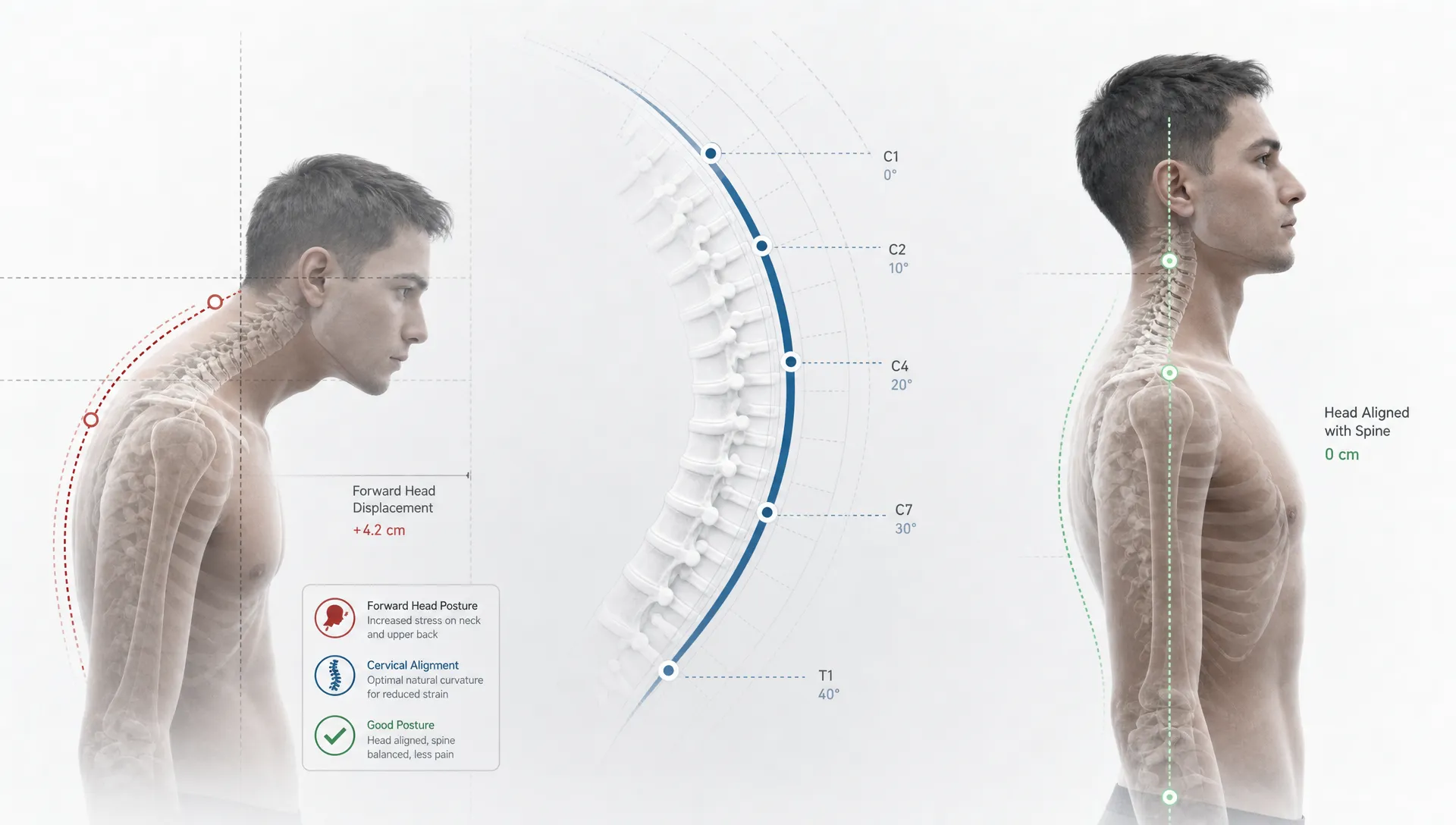
If your neck starts tightening before lunch, your shoulders feel loaded by 3 pm, and headaches arrive after a full day of calls, posture correction treatment can sound almost too simple. Many desk workers have already tried massage, painkillers, ergonomic chairs or a reminder app telling them to sit up straight, only to have the same pain return.
The short answer is yes, posture correction treatment can relieve chronic desk worker neck pain when it targets a measurable structural problem, especially loss of cervical lordosis or forward head posture. The strongest evidence is not for vague posture advice. It is for cervical lordosis rehabilitation, a structured approach that combines cervical extension traction or orthotics with targeted exercise and rehabilitation.
That distinction matters. Chronic desk-related neck pain is often treated as a muscle tension problem, but in some people it is also a loading, alignment and nervous system problem. If the neck curve has flattened or the head has translated forward, treatment aimed only at symptom relief may calm things down for a few days without changing the underlying mechanics.
Desk work rarely causes pain from one bad sitting session. The issue is repetition. Hours of laptop work, phone use, dual-monitor setups, long commutes, and low movement variability can keep the head slightly forward for most of the day. Over time, the body adapts to that position.
The deep neck flexors may become less active, the upper trapezius and suboccipital muscles may guard, the shoulder blades may lose support, and the lower cervical joints may stop moving well into extension. For many Singapore office workers, this cluster of chronic neck and shoulder pain, headaches, and fatigue is often discussed under office syndrome.
This does not mean every desk worker has a damaged spine. It means chronic desk-worker neck pain shouldn’t be reduced to tight muscles alone. If neck cramping keeps returning despite stretches, the question becomes whether the neck is being asked to function from a poor baseline position every day.
A healthy cervical spine normally has a lordotic curve when viewed from the side. When that curve is reduced, sometimes called hypolordosis, or when the head sits forward relative to the shoulders, the neck may experience altered loading through discs, facet joints, muscles, ligaments and nerve tissues. This is where posture correction treatment becomes more than an aesthetic exercise.
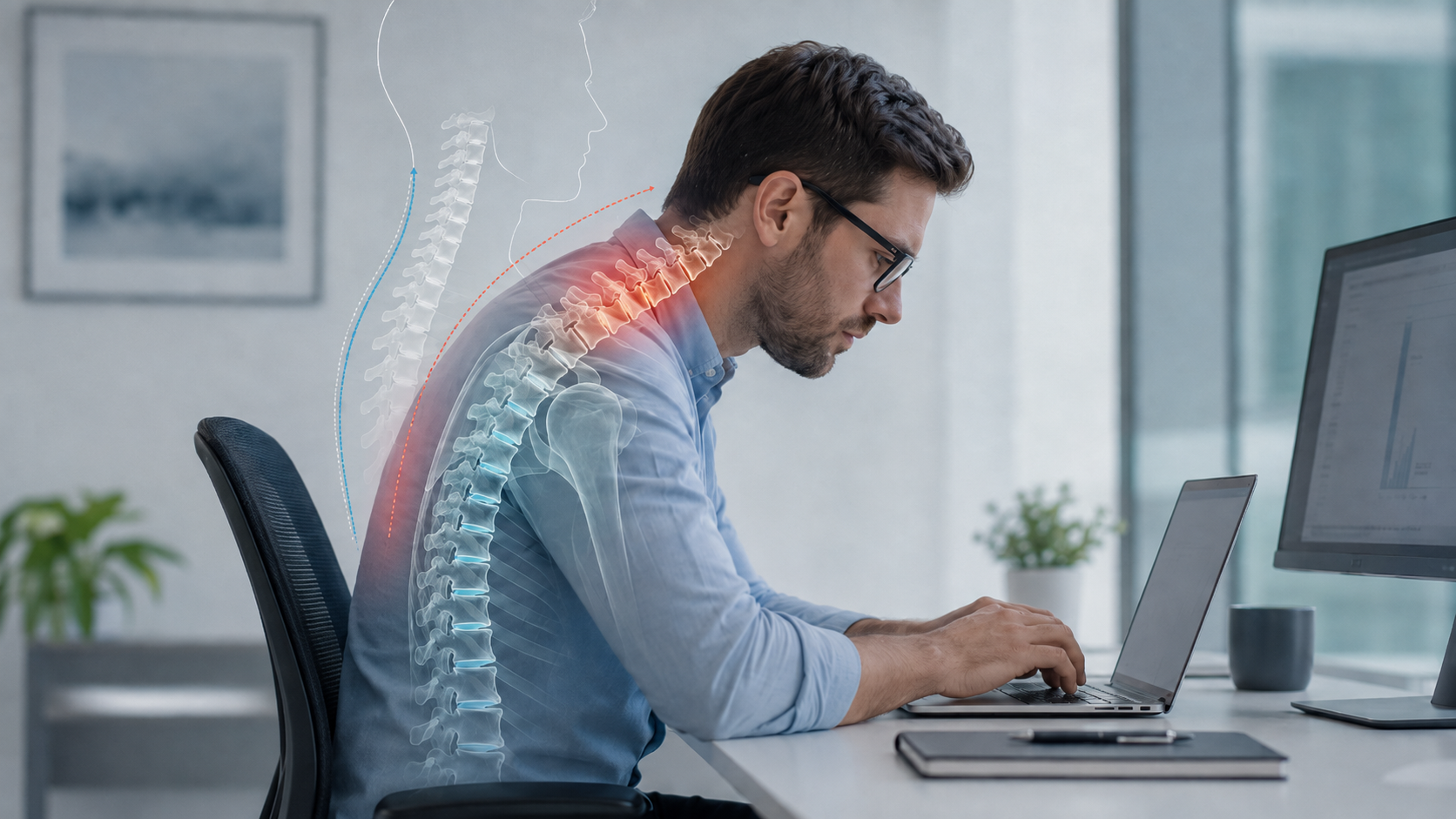
Real posture correction is not simply telling someone to sit straighter. It should identify what needs correcting, measure it where appropriate and use interventions that can plausibly change the structure or control of the neck.
Dr Neck Pain describes its R3NEW X™ approach as a structural chiropractic model rather than symptom-only care. In practical terms, the clinic’s public materials describe three main components: releasing deep-tissue restrictions through AxisFlex Protocol™, resetting neck structure through AxisFlow Adjust™, and retraining posture control through NeuroPosture Calibration™. The clinic also uses digital X-rays to assess alignment and track structural progress.
That model maps closely to the idea tested in cervical lordosis rehabilitation research: measure cervical alignment, apply a corrective force or orthotic when indicated, add exercise and retrain posture sso the improved position holds.
The most important point is selection. A desk worker with a normal cervical curve, no nerve symptoms and mainly stress-related tightness may need active rehab and ergonomic changes more than traction-based curve correction. A desk worker with chronic pain, recurrent headaches, visible forward head posture or arm symptoms may need a more structural assessment.
The most relevant line of research comes from Ibrahim Moustafa, Aliaa Diab and Deed Harrison, who have published randomised trials on cervical lordosis rehabilitation. These studies are often discussed in chiropractic and rehabilitation settings because they do something many neck pain studies do not: they measure both symptoms and structural change.
In a 2022 randomised trial published in the Journal of Clinical Medicine, 30 patients with chronic lower cervical spondylotic radiculopathy and cervical lordosis below 20° were assigned to either standard care or standard care plus cervical extension traction. Standard care included stretching exercises and infrared radiation. The traction group received three-point bending cervical extension traction 3 times per week for 10 weeks, for a total of 30 sessions. Outcomes were tracked after treatment, at 3 months and at 2 years.
The Moustafa, Diab and Harrison randomised trial found that the traction group gained cervical lordosis, maintained much of that improvement at 2 years and had larger, more durable reductions in pain than the control group. The control group improved at first but regressed over time.
Related trials add to the picture. A randomised controlled trial on a cervical posture-corrective orthotic in discogenic cervical radiculopathy found equal pain relief in both groups at 10 weeks, with the orthotic group showing greater gains in cervical lordosis, reduced anterior head translation and lower disability. By the 1-year follow-up the control group had regressed and the orthotic group held its gains, including for pain. A 2016 trial document on the cervical Denneroll orthotic describes these sustained improvements alongside neurophysiological changes.
A 2021 systematic review of controlled trials concluded that cervical extension traction methods can restore cervical lordosis, with reported lordosis gains commonly around 12 to 18 degrees after 15 to 60 sessions. The review also noted that longer-term pain and disability outcomes tended to favour groups receiving extension traction compared with controls that did not receive lordosis correction.
Another related study on cervical kinematics found that increasing lordosis was associated with improved translational and rotational motion of the lower cervical spine. That supports the idea that curve correction is not only a static X-ray change. It may also influence how the neck moves during flexion and extension. The kinematics paper is indexed on PubMed.
The strongest trials focused on people with cervical radiculopathy, discogenic symptoms or confirmed cervical hypolordosis. That is not exactly the same as every office worker with a sore neck after meetings. This is where the evidence needs careful interpretation.
For desk workers with radiographic hypolordosis, forward head posture, chronic headaches, recurrent neck cramping or symptoms travelling into the shoulder, arm or hand, cervical lordosis rehabilitation is a plausible and evidence-supported option. These people are most similar to the populations that benefited in the published trials.
For desk workers with non-specific neck pain and normal cervical alignment, posture correction may still help, but the emphasis may be different. Deep neck flexor training, scapular strengthening, thoracic mobility, proprioceptive exercises, better monitor setup and movement breaks may be enough. Traction-based curve restoration is most defensible when there is a curve problem to restore.
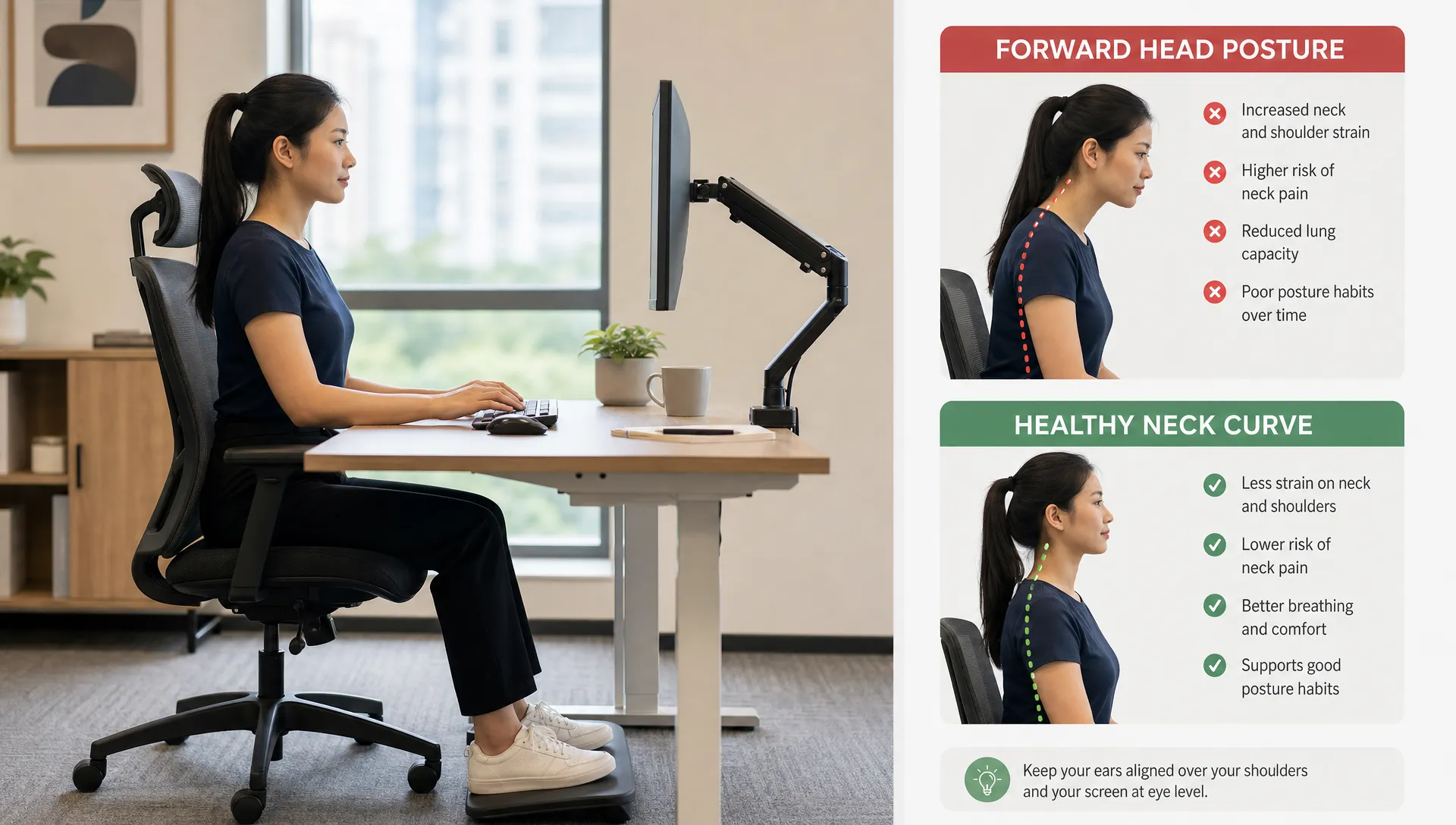
The cervical spine is more than a stack of bones. It is a mechanical and neurological system. When the head sits forward and the cervical curve flattens, several things may happen at once.
First, the tissues at the back of the neck work harder to support the head. That can contribute to fatigue, neck cramping and upper shoulder tension. Second, altered curve orientation can change how load passes through discs and facet joints. Third, nerve roots and the spinal cord may experience different mechanical tension depending on spinal position.
The Moustafa, Diab and Harrison studies are notable because they measured dermatomal somatosensory evoked potentials, or DSSEPs. These tests assess nerve root function. In the 2022 trial, nerve function improvements were maintained in the traction group at long-term follow-up, while the control group regressed. That suggests cervical lordosis rehabilitation may influence more than muscle comfort.
This is also where Dr Neck Pain’s language around neurological posture control has a reasonable clinical direction, but should be understood accurately. The research supports neurophysiological changes and improved sensorimotor measures in selected patients. It does not independently prove every branded mechanism or clinic-specific claim. The practical takeaway is that the nervous system, rather than willpower alone, partly controls neck posture.
A good posture correction plan should be specific enough to avoid guesswork. If the goal is structural correction, baseline measurements matter. If the goal is symptom control, function and pain scores matter. Ideally, both are tracked.
This is also why posture correction should not create dependency. If the treatment is genuinely corrective, the end goal is to improve structure, control and self-management so the patient can work, sleep and move with less reliance on repeated symptom relief.
Dr Neck Pain’s model aligns with this principle through X-ray-guided assessment, personalised treatment planning, posture retraining, progress tracking, and maintenance education. Its public claim that many patients achieve lasting corrected balance is clinic-specific, so discuss it during consultation in the context of your case, your X-ray findings, and your goals.
The evidence is encouraging, but it is not a blanket promise. A balanced reading looks like this.
The main limitation is that many high-quality studies involve relatively small samples and selected patient groups. The 2022 RCT had 30 participants. That does not invalidate the findings, especially with a 2-year follow-up, but it does mean clinicians should apply the evidence to the right patient rather than to everyone with a tight neck.
If your neck pain has lasted more than a few weeks, keeps returning after massage, or interferes with sleep and concentration, an assessment is sensible. It becomes more important if you have symptoms such as arm pain, numbness, tingling, weakness, frequent headaches, dizziness after neck movement, or pain that worsens despite rest.
Seek urgent medical advice if neck pain follows trauma, comes with fever, unexplained weight loss, severe neurological symptoms, loss of coordination or sudden severe headache. Posture correction treatment is not a substitute for emergency or specialist medical care in those situations.
Posture correction is not magic, and it means more than "sitting up straight". When based on measurable cervical alignment and targeted rehabilitation, it can provide lasting relief for chronic desk worker pain.
If your neck pain keeps returning despite massages and ergonomic chairs, it is time to measure your baseline. Book an X-ray-guided structural assessment with Dr Neck Pain today to find out if your cervical curve is the hidden cause of your daily tension.