

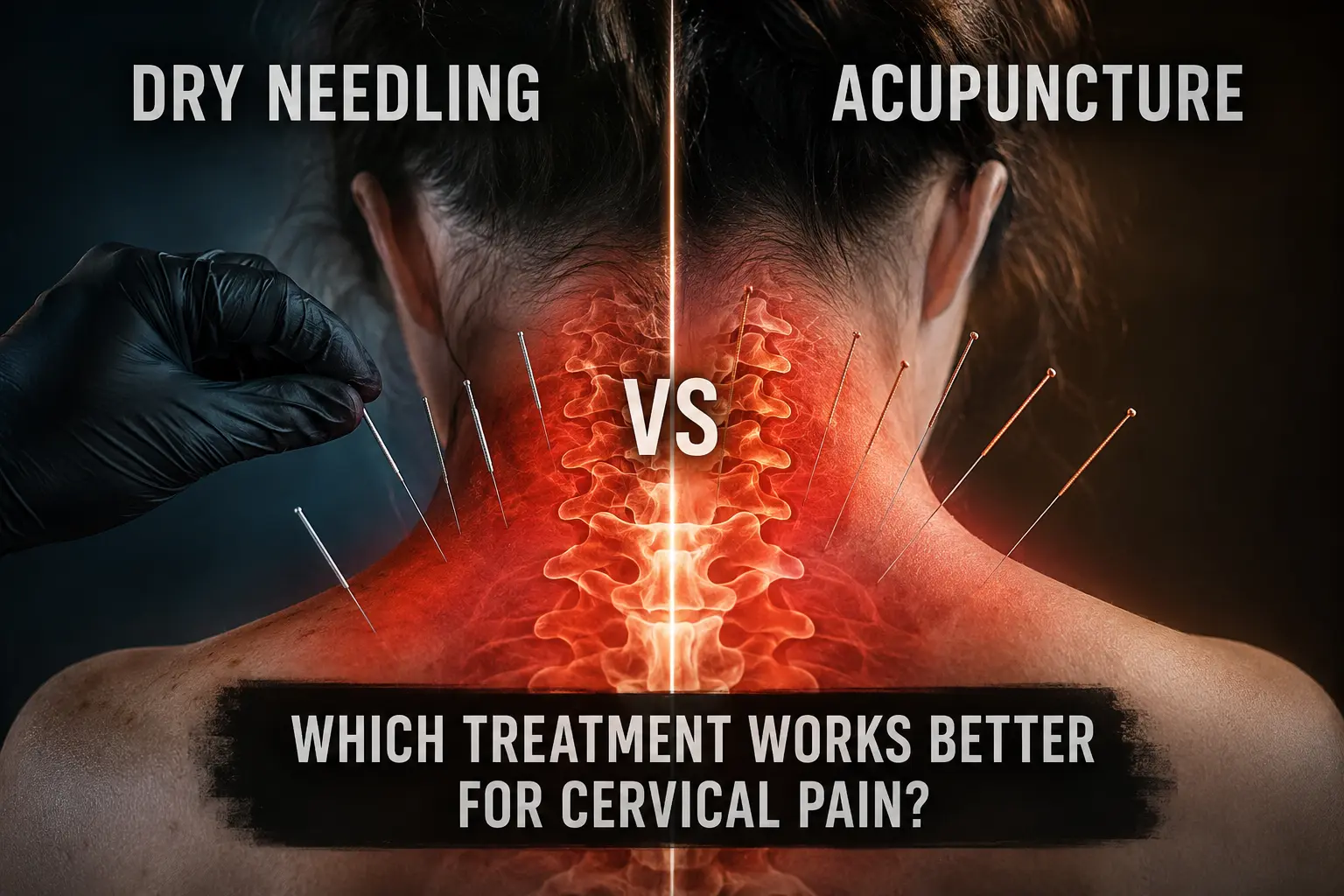
If you are comparing dry needling and acupuncture for neck pain, the honest answer is not that one is always better. Both can reduce cervical pain in the short term. They simply come from different clinical frameworks, suit different types of neck problems, and are best treated as adjuncts rather than stand-alone cures.
The practical question is this: are you treating the irritated soft tissue, or correcting the mechanical reason it keeps getting irritated? Here is what the evidence actually shows, how to match the right needle to your diagnosis, and how to know when needles alone are no longer enough.
Key takeaways
- Both help short-term, neither is a cure. Dry needling and acupuncture both offer short-term relief for cervical pain, and the evidence is not strong enough to call either universally superior.
- Different tools, different targets. Dry needling targets myofascial trigger points (muscle knots). Acupuncture works along TCM meridian points and modulates pain more broadly.
- Diagnosis decides. Evidence suggests dry needling suits muscle-based neck pain, while acupuncture has relatively more support for cervical spondylosis, radiculopathy, and dizziness linked to neck dysfunction.
- Evidence quality is mixed. Head-to-head trials are scarce, samples are often small, and follow-up is short, so practitioner skill and an accurate diagnosis matter as much as the method.
- The structural limit. Neither needle physically moves bones. Structural methods, including the X-ray-guided R3NEW X™ Protocol, address the spinal alignment that symptom-focused needle treatments cannot.
The Short Answer: Both Work Best for Different Neck-Pain Patterns
Dry needling usually matches myofascial neck pain best, especially when a trained practitioner can identify clear trigger points in muscles such as the upper trapezius, levator scapulae, sternocleidomastoid, or suboccipitals. Acupuncture is often better supported for broader cervical pain patterns, including cervical spondylosis, radicular symptoms, and pain states where stress, sleep, anxiety, or central pain sensitivity play a major role.
But neither treatment physically changes neck alignment. Needles can calm pain, reduce muscle tone, and improve short-term movement. They cannot restore a lost cervical curve, change forward head posture, or reposition vertebrae. If recurring pain is driven by a structural alignment issue, needle therapy may help you feel better for a few days, but the problem tends to return unless the underlying mechanics are addressed. This is the distinction most comparison articles miss.
How Each Technique Actually Works
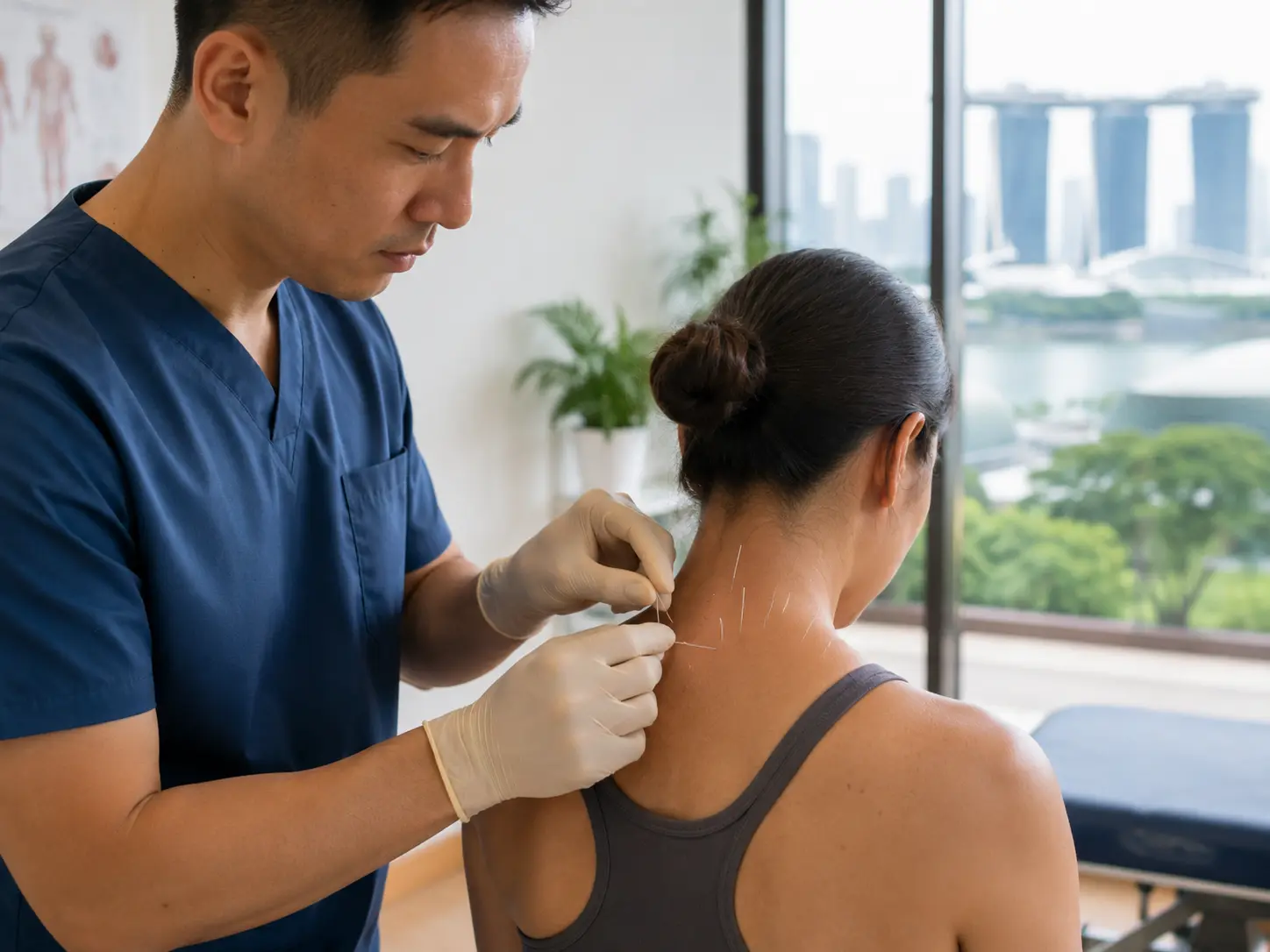
Both methods use thin needles inserted into the skin, but the reasoning behind where those needles go comes from two very different traditions.
Dry needling targets trigger points
Dry needling is a Western, biomedical technique focused on myofascial trigger points: tight, irritable spots within muscle that can produce local pain, referred pain, and stiffness. In the neck, common targets include the upper trapezius, levator scapulae, scalenes, sternocleidomastoid, and suboccipital muscles. A practitioner inserts a thin solid filament needle into the muscle, often aiming to produce a local twitch response, a brief, involuntary contraction many patients describe as a cramp-like release.
Proposed mechanisms include mechanical disruption of contracted muscle fibres and dysfunctional motor endplates, local biochemical shifts (reduced inflammatory mediators, improved blood flow), and modulation of pain signals through a spinal gate-control effect and descending pain pathways. In simple terms, dry needling tries to reset an overactive, painful muscle and reduce the sensitivity of the nervous system around it. It often feels more intense than acupuncture, because the goal is to reach the dysfunctional muscle tissue directly rather than to relax you.
Acupuncture targets meridian points
Acupuncture comes from Traditional Chinese Medicine, which is deeply established in Singapore. It uses fine needles at specific acupoints along meridians, often selected from a TCM assessment of Qi, blood flow, and internal balance. For cervical pain, points may sit around the neck, shoulders, upper back, arms, or legs. Some practitioners add a mild electrical current, a variation called electroacupuncture.
TCM explains the effect as restoring the flow of Qi and blood. Modern research offers a parallel explanation that does not require the traditional framework: acupuncture appears to modulate central pain processing, autonomic regulation, and neuroimmune pathways, and in cervical vertigo some evidence points to changes in cerebral blood flow. It is generally more superficial than dry needling, with needles often left in place for 20 to 40 minutes for a calmer, more relaxing experience.
What the Evidence Shows by Condition
Neither treatment works equally well across every type of neck problem. Sorting the evidence by condition makes it clearer where each tends to perform best. Throughout, it is worth remembering that study quality is mixed, with small samples and short follow-up common.
Myofascial trigger points favour dry needling
For neck pain rooted in myofascial trigger points, dry needling carries the stronger direct evidence base. Multiple systematic reviews and trials point to short-term reductions in pain and disability when it targets trigger points in the neck and shoulder muscles, and a 2025 review of deep versus superficial techniques found both reduce pain and disability short-term with no clinically meaningful difference between them. The picture is not uniformly positive: some sham-controlled trials found no added benefit over sham or standard care for chronic mechanical neck pain at longer follow-up. Taken together, the evidence suggests dry needling works best as a short-term tool for muscle-based tightness rather than a long-term standalone fix.
Cervical spondylosis and radiculopathy favour acupuncture
When the issue shifts from muscle knots to degenerative changes in the cervical spine (cervical spondylosis), the evidence tilts toward acupuncture. Systematic reviews suggest it outperforms control treatments such as traction or massage for pain relief and neurological function in cervical spondylotic radiculopathy, and electroacupuncture has shown benefit for spondylosis-related pain, including in patients with co-existing anxiety. Acupuncture combined with bone-setting has also shown greater improvement in cervical vertigo symptoms than either alone, though study quality is limited. Regardless of framework, acupuncture's evidence base for these nerve-related conditions currently runs deeper than dry needling's.
Head-to-head trials remain scarce
When researchers put the two in the same study, direct comparisons are rare, and most research measures each against a sham needle, standard care, or another therapy rather than against each other. A 2026 randomised trial in chronic cervical myofascial pain syndrome compared low-level laser acupuncture with dry needling, both added to routine physiotherapy: both helped, dry needling produced slightly faster early improvements, and laser acupuncture showed more sustained gains on some patient-reported outcomes over time. That does not crown a universal winner. It reinforces the more useful conclusion: matching the treatment to the patient matters more than picking a favourite.
Which Option Fits Which Clinical Picture?
Choosing becomes far less confusing once the decision is tied to a diagnosis rather than preference. These patterns reflect where current evidence leans, not a guarantee for any individual case.
| Clinical picture | Better-supported option | Why it may fit |
|---|---|---|
| Clear trigger points in upper trapezius or levator scapulae | Dry needling (within a physio plan) | Directly targets myofascial trigger points; short-term pain and range-of-motion gains |
| Desk-related neck tightness with shoulder knots | Dry needling plus posture and loading correction | The muscle may relax, but ergonomic and postural retraining are still needed |
| Cervical spondylosis with neck pain, with or without arm symptoms | Acupuncture or electroacupuncture | Evidence is more supportive for pain and neurological symptoms in spondylosis-related cases |
| Chronic neck pain with stress, poor sleep or anxiety | Acupuncture | May help modulate pain sensitivity and autonomic nervous-system activity |
| Athlete or active patient with focal muscular pain | Dry needling within a rehab plan | Can support short-term pain relief while exercise restores capacity |
| Recurring neck pain despite repeated needle therapy | Structural assessment | Repeated relapse suggests a driver beyond the irritated muscle or nerve |
Practical Comparison: Needles vs Structure
In Singapore, the real decision for a chronic pain sufferer often has three layers: managing the soft tissue (needles), active rehabilitation, or correcting the underlying mechanical structure.
| Factor | Dry Needling | Acupuncture (TCM) | Structural Correction (R3NEW X™) |
|---|---|---|---|
| Main clinical target | Myofascial trigger points and tight, painful muscles | TCM acupoints, pain pathways, broader symptom patterns | Cervical bone alignment and restoring the C-curve |
| Common neck-pain fit | Focal knots, stiffness, movement pain, postural overload | Cervical spondylosis, nerve pain, stress-linked symptoms | Chronic pain that returns weekly despite physio or massage |
| Typical sensation | Deep ache, twitch, cramp-like release, post-treatment soreness | Dull ache, heaviness, tingling, warmth or mild current | Mechanical stretching and controlled repositioning |
| Framework | Western musculoskeletal and neurophysiological model | TCM framework with modern pain-modulation explanations | Biomechanical alignment, verified with imaging |
| Main limitation | Relief may fade if the mechanical cause remains | Relief may fade if structural or ergonomic drivers remain | Requires commitment to a progressive, tracked protocol |
Safety, Side Effects & Aftercare
Safety profiles for both treatments look broadly similar: most problems are minor and short-lived, while serious complications are rare but real, which is exactly why a trained, registered practitioner matters, especially around the neck where nerves, blood vessels, and the lung apex are close.
Dry needling
Minor side effects are common. Across the research, minor events (soreness, minor bruising, small amounts of bleeding, brief symptom flare) have been reported in anywhere from near zero up to roughly 48% of treatments, typically fading within a day or two, much like the soreness after a hard workout. Major adverse events per treatment are uncommon (in the region of 0% to 0.43%), and serious complications such as nerve irritation or a collapsed lung (pneumothorax) are rare but well-documented in the literature. Risk is lowest when the practitioner is specifically trained in cervical needling.
Acupuncture
Acupuncture's side-effect profile is milder still in most reports, mainly soreness, minor bleeding, bruising, or transient dizziness. Serious events, including infection from poorly sterilised needles and, very rarely, pneumothorax, are uncommon but possible, and the risk drops sharply with a registered practitioner using sterile, single-use needles.
Aftercare (dry needling)
For about 24 hours after a session, it is sensible to avoid strenuous exercise and heavy lifting, go easy on alcohol and caffeine, skip aggressive stretching of the treated area, and avoid very hot baths or saunas while the sites are still tender. Gentle movement is better than sitting completely still. Tell your practitioner if you take blood thinners, have a bleeding disorder, are pregnant, faint with needles, or have had recent surgery.
The Part Needle Therapy Can Miss: Why the Pain Keeps Returning
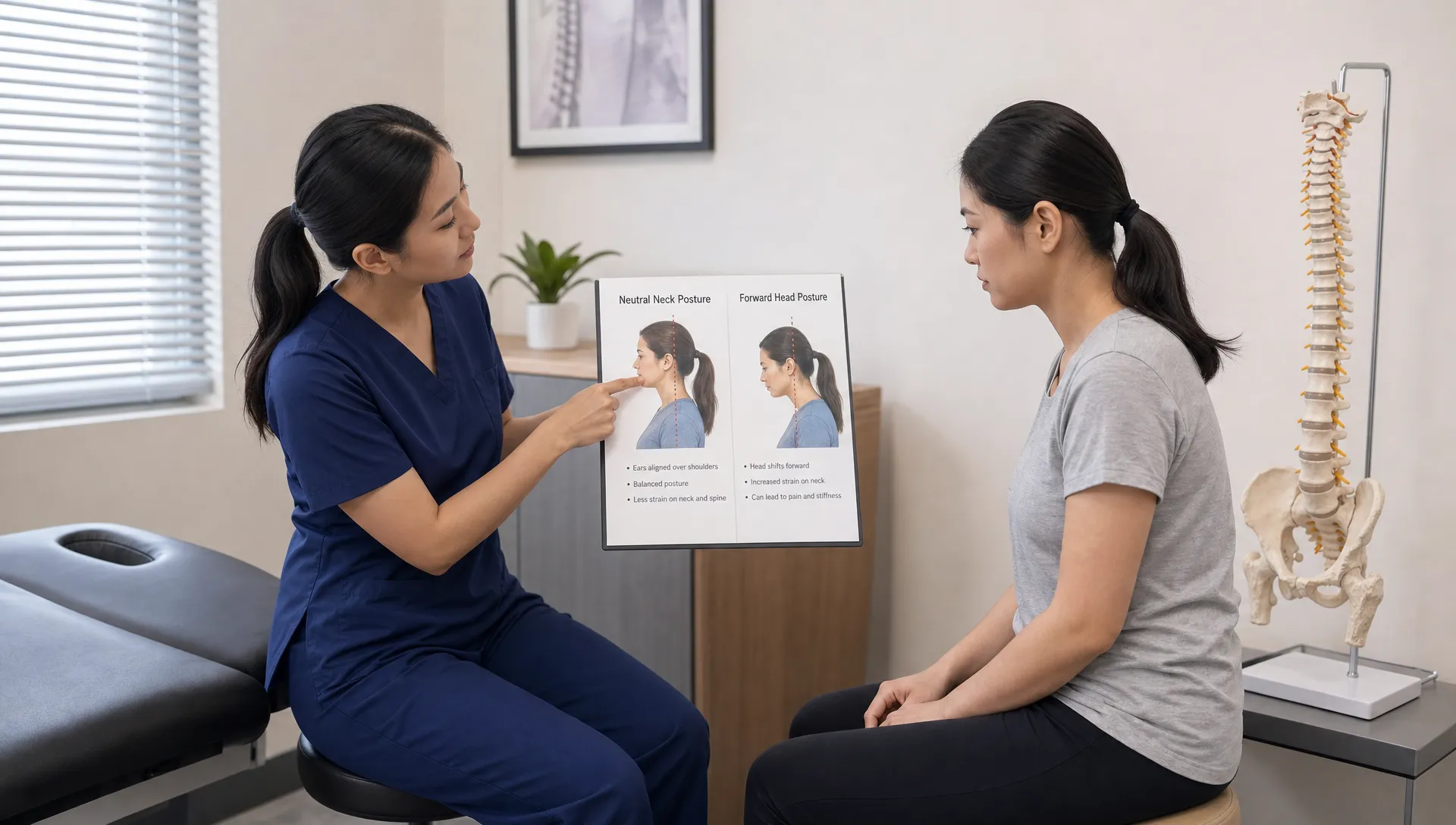
Patients often search for dry needling or acupuncture because they want a quick release, and that is completely understandable. The bigger question is why the same muscle keeps tightening. Muscles rarely knot up for no reason. In many Singapore office workers, the neck muscles work overtime because the head has drifted forward from prolonged laptop and phone use, so the posterior neck and shoulder muscles hold tension for hours. This is why office syndrome, or tech-neck, is so closely tied to neck pain and headaches.
The misaligned tire
Think of a car with a badly misaligned wheel. The tyre (your muscle) keeps wearing out unevenly. Dry needling and massage are like constantly buying new tyres: they feel great for a few days, but because the axle (your cervical spine) is crooked, the new tyre wears out again. You have to fix the alignment first.
Both dry needling and acupuncture can help the irritated muscle or nerve. But if the culprit is poor cervical alignment, a lost C-curve, or forward head posture, the same tissues get overloaded again as soon as you return to your desk. Needles do not move bones, provide objective imaging of the cervical curve, or retrain posture. At Dr Neck Pain, the focus is different: we use the X-ray-guided R3NEW X™ Protocol to work on rebuilding the cervical curve through three phases (Release, Reset, and Recalibrate), tracking structural progress with objective imaging rather than relying only on how you feel. That does not mean every patient needs structural correction. It means recurring neck pain deserves to be assessed mechanically, not only treated symptomatically.
Singapore Considerations: Cost, Insurance & Providers
In Singapore, acupuncture and dry needling sit in different healthcare ecosystems. Acupuncture should be performed by a registered TCM practitioner (you can check registration with the TCM Practitioners Board). Dry needling is often performed by a physiotherapist (registration is checkable through the Allied Health Professions Council). Cost varies by clinic, session length, and whether treatment is bundled with consultation or rehab.
| Practical factor | Acupuncture | Dry needling |
|---|---|---|
| Common billing category | TCM consultation or acupuncture session | Part of a physiotherapy session |
| Typical private cost range | Commonly around S$60 to S$100 | Commonly around S$130 to S$200+ within physio |
| Corporate benefits | Often under a TCM allowance, if your plan includes it | Often under physiotherapy benefits; many plans want a GP referral |
| Medisave for routine outpatient care | Generally not claimable | Generally not claimable |
| Registration check | TCM Practitioners Board | AHPC, if performed by a physiotherapist |
Spend your allowance wisely
If your pain is chronic, it is worth checking your benefits before spending your allowance on repeated temporary releases. Many executive and extended-health plans also cover structural assessments and correction programmes. For the fuller 2026 cost and Medisave picture, see our guide to the best neck pain clinics in Singapore. Figures here are typical patterns, not fixed fees, so confirm directly with the provider and your insurer.
How to Choose the Right Next Step
A good decision starts with diagnosis, not preference. Before booking either treatment, ask three questions.
- What is the likely pain generator?A focal trigger point points more toward dry needling. Nerve symptoms, spondylosis, or whole-body pain sensitivity may point more toward acupuncture or medical evaluation.
- Is the relief lasting?If you need the same treatment every few days just to function, you may be managing symptoms without correcting the cause.
- Has your neck structure been assessed?If pain is chronic, recurrent, or linked to posture, headaches or arm symptoms, an alignment-focused assessment may reveal mechanical issues that needle therapy cannot correct.
None of these options has to exist in isolation. Many people do well using acupuncture or dry needling for short-term relief while they work on posture, strengthening, and, where indicated, structural correction. The mistake is expecting a needle to do a job it was never designed to do.
When to seek urgent care instead of needles
Do not self-manage neck pain with needles if you have red flags. Seek prompt medical assessment if your neck pain:
- Follows a fall or accident
- Comes with progressive arm weakness
- Causes loss of balance or coordination
- Comes with fever or unexplained weight loss
- Involves sudden, severe headache
- Comes with fainting or chest pain
- Involves facial drooping or speech difficulty
- Comes with persistent numbness or tingling
Frequently Asked Questions
Which is cheaper in Singapore: acupuncture or dry needling?
Acupuncture is generally cheaper per session in many private settings, often around S$60 to S$100, and may be covered under corporate TCM benefits. Dry needling is usually performed within a physiotherapy session, which may cost around S$130 to S$200 or more. The real cost depends on how often you need treatment. Weekly temporary relief can end up more expensive than investigating the underlying cause.
Why does my neck feel tight again 3 days after dry needling?
Dry needling can relax an overactive trigger point, but it does not remove the mechanical load on that muscle. If your head sits forward, your cervical curve is poor, or your workstation keeps your neck under strain, the same muscle can tighten again once you return to normal habits. Recurring tightness is a signal to assess posture, loading, and neck alignment, not just to book another session.
Is acupuncture or dry needling better for a pinched nerve?
For nerve-like symptoms, acupuncture has relatively more supportive evidence in cervical spondylosis-related studies. However, neither acupuncture nor dry needling physically removes a disc bulge or changes vertebral alignment. If you have arm numbness, tingling, weakness, or persistent radiating pain, get a proper assessment rather than relying only on symptom relief. See more on slipped-disc and nerve pain.
Can I claim Medisave for dry needling or acupuncture for neck pain?
For routine outpatient care, generally no. Private acupuncture at TCM clinics and dry needling at private physiotherapy clinics are generally not Medisave-claimable. Some corporate health plans may reimburse TCM, physiotherapy, or chiropractic care, but coverage differs widely. Check your policy, referral requirements, and claim process before starting.
Does dry needling hurt more than acupuncture?
Usually, yes. Acupuncture is often more superficial and may feel like a dull ache, heaviness, or tingling. Dry needling targets trigger points and can produce a local twitch response that feels like a brief, deep cramp. Both use very fine, hair-thin filament needles (nothing like a blood-draw needle) and should be tolerable with a skilled practitioner. Stop if the pain feels sharp, electric, or unsafe.
Can either treatment give permanent headache relief if my headaches come from my neck?
They may help cervicogenic headaches in the short term if muscle tension or pain sensitivity is contributing. If headaches keep returning because of forward head posture, poor cervical alignment, or chronic joint stress, needle therapy alone is unlikely to provide lasting correction. See how neck-driven headaches are assessed in our guide to cervicogenic headache and migraine care. Sudden severe headaches or headaches with neurological symptoms need urgent medical evaluation.
Get the Right Diagnosis Before Choosing Needles
Dry needling and acupuncture can both be useful, and the better choice depends on what is driving your cervical pain. But if your symptoms keep returning after repeated treatment, the next step is not simply more needles. It is a clearer structural diagnosis. The muscle is often the victim, not the culprit, and the only way to know whether your cervical alignment is driving the cycle is to look.
Stop treating the symptom. Start fixing the structure.
If your neck pain, headaches, or posture problems keep returning despite dry needling or acupuncture, your cervical alignment may be compromised. Find out whether the X-ray-guided R3NEW X™ protocol targets the root cause of your chronic neck pain.
Book your structural assessment on WhatsAppReferences
- Efficacy of Dry Needling and Acupuncture in the Treatment of Neck Pain. Anesth Pain Med. 2021. PMC
- Deep versus superficial dry needling for neck pain: a systematic review of randomised clinical trials. Medicina. 2025. PMC
- Dry needling for myofascial neck pain: systematic review of short-term pain and disability outcomes. PMC
- Acupuncture for cervical spondylosis and radiculopathy: systematic review of pain and neurological outcomes. PMC
- Direct comparisons of dry needling and traditional acupuncture for non-specific cervical pain remain limited: a review. PubMed
- Frequency and severity of adverse events associated with dry needling: a systematic review and meta-analysis. Phys Ther. 2026. PTJ
- Low-level laser acupuncture versus dry needling in chronic cervical myofascial pain syndrome: a randomised controlled trial. 2026. PMC
Related reading
This article is educational information only and is not medical advice, diagnosis, or a treatment recommendation. Evidence on needle therapies is evolving, study quality is mixed, and individual results vary. Always consult a licensed healthcare professional for a diagnosis and plan tailored to your condition. If you experience progressive weakness, loss of coordination, or sudden severe headaches, seek urgent medical assessment.