


You will spend an hour tuning a mechanical keyboard, a colour-calibrated monitor and a chair that cost more than your first car. The one piece of hardware you never optimise is the one holding your head up.
This is not an acute-pain guide. It is about the slow structural drift, forward head posture, that builds over years of high screen time, and a realistic 4-week plan to start reversing the habit before it sets.
The short version
- Forward head posture (FHP) is a load pattern, not a single moment of injury. It builds when the head sits ahead of the shoulders for hours a day.
- Your neck does not clock off at 6pm. A 10-hour work screen day that rolls into evening gaming, trading or editing is one continuous session to your cervical spine.
- A premium chair sets your pelvis. It does not hold your head back for you, and it cannot rebuild a curve that has already flattened.
- The fix is habit plus strength plus setup, run on a schedule. A realistic 4-week plan beats another one-off stretch when it aches.
- Posture habits shift in weeks. A genuinely flattened cervical curve is a longer, measurable process, and one worth assessing rather than guessing at.
What Forward Head Posture Does to Your Neck
A neutral head sits balanced over the shoulders, ears roughly stacked over the collarbones. Forward head posture is the drift out of that line: the head slides forward, the upper back rounds, and the chin pokes toward the screen. It is the default end-state of high screen time, and it is what most people mean by "tech neck."
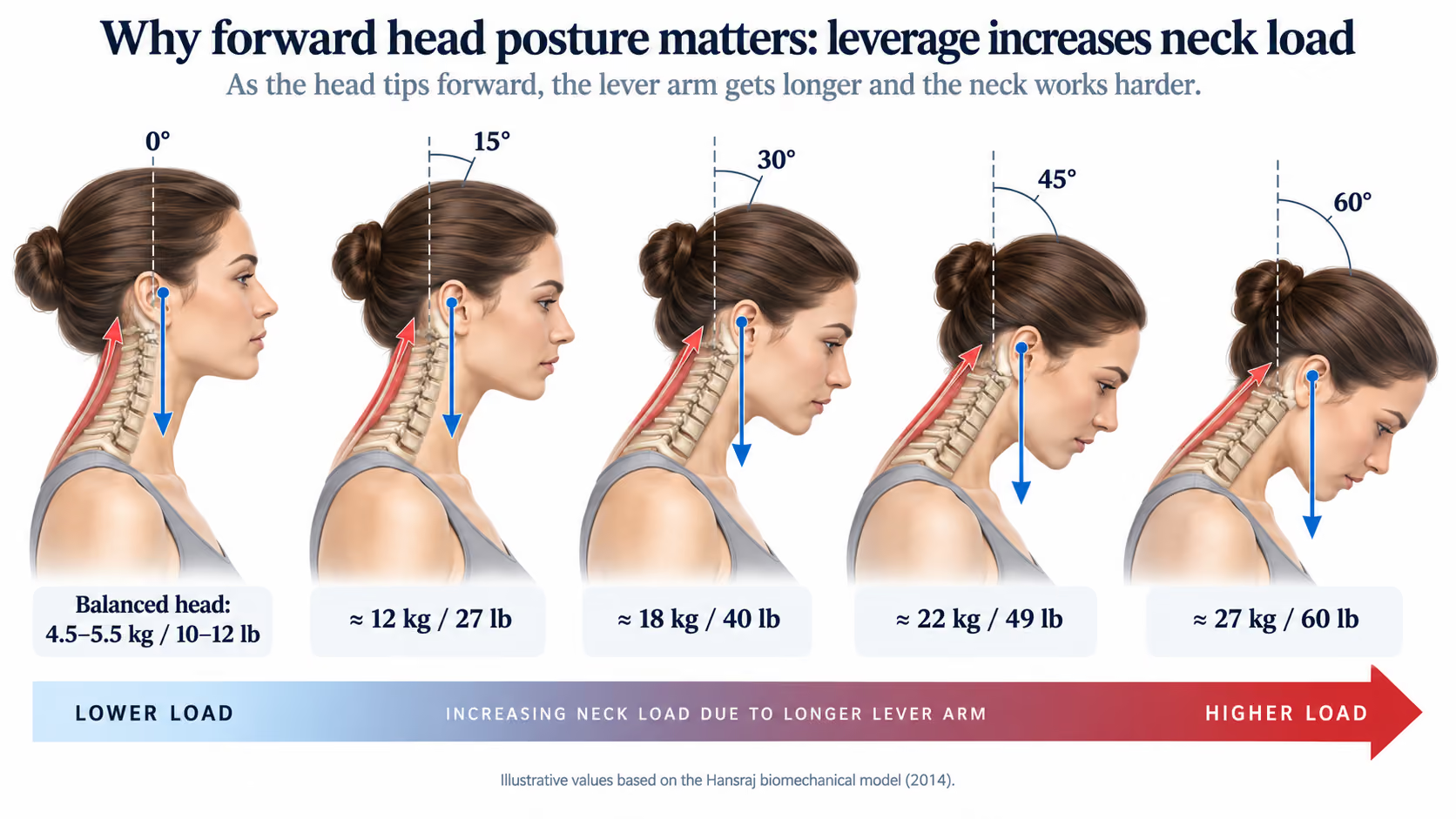
The reason it matters is the length of the lever. Your head weighs roughly 4.5 to 5.5 kg (10 to 12 lb) when it is balanced. Tip it forward and the muscles at the back of the neck have to counter a longer and longer lever. A widely cited biomechanical model by Hansraj (2014) estimated the effective load on the neck rising to about 27 lb at 15 degrees of forward tilt and up to roughly 60 lb at 60 degrees.
Read that number honestly
Those Hansraj figures are a mathematical model, not a measured injury threshold, and a real neck is not a static lever. Nobody is claiming 60 lb is bearing down on your spine. The useful part is the direction: the further forward the head drifts and the longer it stays there, the harder the neck and upper back work, hour after hour.
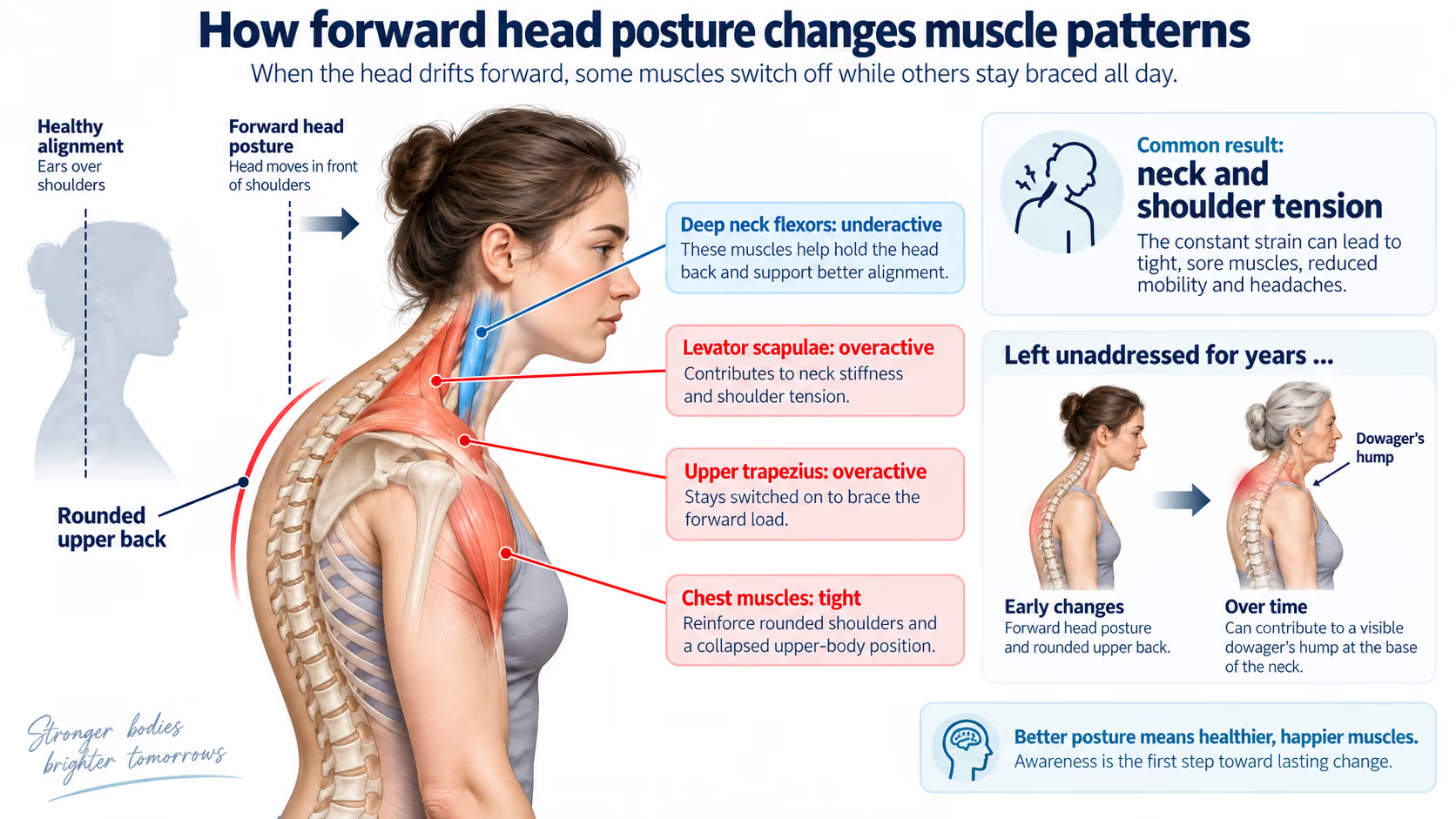
The muscle pattern follows the position. The deep neck flexors that help hold the head back become underactive. The upper trapezius, levator scapulae and chest muscles stay switched on, bracing the forward load, which is why the ache shows up as neck and shoulder tension and a tight, rounded upper back. Left unaddressed for years, that rounding is also how a visible dowager’s hump starts to form at the base of the neck.
One caveat worth stating plainly, because most posture content skips it: forward head posture is consistently associated with neck pain in the research (a 2019 systematic review and meta-analysis by Mahmoud, Moustafa and colleagues found a moderate relationship), but association is not proof that fixing posture erases pain. Plenty of people have measurable FHP and no symptoms. FHP is a load pattern worth reducing, especially if you already hurt, not a diagnosis on its own.
Why Your S$1,500 Chair Will Not Fix It
The reflex, for people used to solving problems by buying better equipment, is to upgrade the chair. A Herman Miller or a top-tier Secretlab is a genuinely good chair. It is also, for forward head posture, solving the wrong half of the problem.
A chair sets your pelvis and supports your lower back. It holds the base of the spine. What it cannot do is hold your head back for you. If your monitor is low, or you lean in during a focus block, the head still drifts forward and the neck still carries the load, in a very comfortable chair. Racing-style chairs can make this worse: a tall head pillow or deep bucket recline can push the shoulders forward and prop the chin out, training the exact posture you are trying to lose. Screen layout does the same thing sideways, which is why ultrawide against dual monitors is worth deciding deliberately.
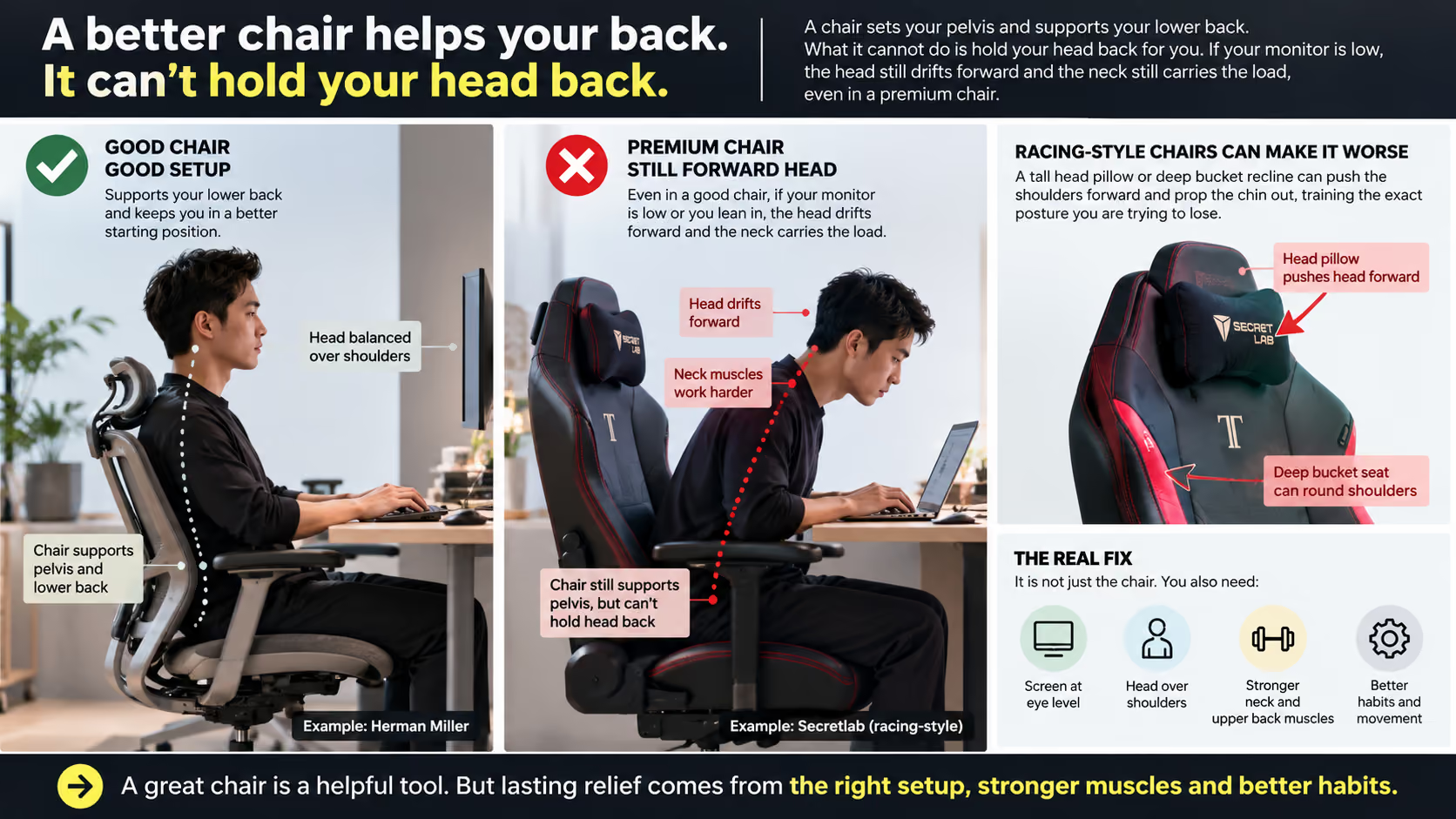
A better chair changes how comfortable the hours feel. It does not change the structure carrying the load, and it cannot make you move.
Three hours in a S$1,500 chair is still three static hours. If your neck burns after every long session regardless of the chair, the driver is more likely load, strength and alignment than lumbar support. That is a different problem, with a different fix.
None of this means setup is pointless, it is not. But the highest-value setup change for a screen worker is screen height, not seat price: the top of the monitor at or just below eye level, about an arm’s length away, so you look straight ahead with the head level rather than dropping the chin. If you find yourself leaning in to read, scale the display to 125% instead of moving your head toward it. For the full set of heights, angles and distances, our ergonomic workstation setup guide has the measurements.
The 90-Second Micro-Break
The standard advice, take a 20-minute walk every hour, is useless to someone mid-way through a deploy, a market open or a client call. It gets ignored, which means it protects nobody. The realistic unit is far smaller: a 90-second reset you run in the gaps that already exist, while a build compiles, an order fills, or a meeting loads.
Run this every 30 to 60 minutes. It is not a workout. It is a nudge that interrupts the static load before symptoms build:
- 10 chin nodsA small "yes" nod that lengthens the back of the neck and switches the deep neck flexors back on. Not a hard brace.
- 10 shoulder-blade squeezesDraw the blades gently down and back, as if holding a pencil between them, without shrugging toward your ears.
- 5 slow upper-back extensionsOver the back of the chair, open the rounded upper back the opposite way to how it sits all day.
- One eye and neck resetLook to something far across the room for 20 seconds, and roll the shoulders once. It breaks both the neck load and the screen focus.
The point is frequency, not intensity. Long static posture tends to irritate the neck more than total screen hours alone, so a brief reset done often beats a perfect stretch done rarely. On a longer break, add a doorway chest stretch for 30 seconds a side to release the tight front that pulls the shoulders forward.
The 4-Week Posture Correction Plan
Retraining a posture habit is a progression, not a single routine you repeat forever. The schedule below layers setup, mobility and strength over four weeks so the change actually holds. It is deliberately light on exercise mechanics, because the full protocol, sets and technique cues live in one place: our neck-strengthening routine. Use this as the calendar, and that guide as the how-to.
A four-week progression, roughly ten minutes a day plus micro-breaks.
| Week | Focus | What to add |
|---|---|---|
| Week 1 | Reset alignment | Chin nods and shoulder-blade squeezes daily, plus the 90-second micro-break every 30 to 60 minutes |
| Week 2 | Fix the setup | Keep Week 1, and correct screen height, chair support and how close the keyboard and mouse sit |
| Week 3 | Add strength | Band rows or pull-aparts for the mid-back, so the upper back can hold the shoulders back on its own |
| Week 4 | Mobility and endurance | Wall angels and upper-back extensions, and longer periods holding a tall, level head during work |
Clinical note
The move people botch is the chin nod. It is a small nod, as though agreeing quietly, not a hard backward jam and not a look down. If the big muscles at the front of the neck stand out or the jaw clenches, the effort is too high and it stops training the deep flexors you are trying to wake up.
Mild muscle effort through this is fine. Sharp pain, or anything that travels down the arm, is not, and it means stop and get assessed rather than push through.
Most people find it easier to sit tall, with less end-of-day stiffness, within two to four weeks of combining the exercises, the setup changes and the micro-breaks. That is the habit and the muscle balance responding. Whether the underlying structure has changed is a separate question.
Can Forward Head Posture Be Reversed?
This is the question the four-week plan runs into, and it deserves an honest answer rather than a slogan. It helps to separate two layers.
✓ The layer that trains quickly
- The habit of where you hold your head
- Deep neck flexor activation and endurance
- Mid-back and shoulder-blade strength
- Tightness in the chest and upper traps
✗ The layer that does not
- A flattened or reversed cervical curve
- Fixed structural anterior head carriage
- Joint restrictions that reload the pattern
- Changes you can measure on X-ray but not feel
The left column responds to the plan above in weeks. The right column is structural, and it is where honest expectation-setting matters. There is a body of independent academic physiotherapy research, led by Professor Ibrahim Moustafa at the University of Sharjah, showing that extension-based rehabilitation can increase cervical lordosis (the neck’s natural curve) and improve pain and nerve-root function in selected patients, with benefits maintained at long-term follow-up. It is genuinely encouraging work. It also comes with real limits: the samples are modest, the protocols are specialised, and independent replication is still limited, so it is not yet standard guideline care.
The practical takeaway is not "posture is permanent" and not "any exercise reverses your curve." It is that the habit is trainable now, and genuine structural change is a slower, measurable process that is worth guiding with actual measurement rather than hoping a stretch is doing it. If your posture and symptoms plateau after a fair effort, that is the signal to find out which layer you are dealing with. On the wider question of whether posture correction treatment relieves chronic desk-worker neck pain, we cover the evidence separately.
When the Tingling Is Not Your Wrist
High-screen professionals often blame the wrist for pins and needles in the hand, and reach for a wrist brace. Sometimes that is right. But numbness, tingling or weakness in the hand can also come from higher up: nerve irritation in the neck (cervical radiculopathy), or compression around the shoulder and collarbone (thoracic outlet syndrome), both of which forward head posture and rounded shoulders can feed.
If symptoms travel from the neck into the shoulder, arm or fingers, icing the wrist and carrying on is the wrong move. That pattern needs an assessment of the neck, the shoulder mechanics and the nerve signs, not another wrist gadget. If you are not sure whether what you have is a simple stiff neck or something that has started involving a nerve, our companion guide walks through exactly that decision.
Not sure if it is posture strain or a nerve? The triage guide sorts a mechanical stiff neck from a pinched nerve, and you can see how other Singapore patients progressed before deciding anything.
Read the 14-day triage guide →When Posture Needs a Structural Assessment
If your posture and symptoms keep returning despite a fair run at the exercises, the setup changes and the micro-breaks, the useful next step is to measure what is actually going on rather than repeat the same plan louder. Forward head posture that will not budge can involve a reduced cervical curve or joint restriction, and those are visible on imaging in a way they are not to the naked eye.
- History and examinationWhat the posture and pain do, plus a screen for the nerve, reflex and balance signs that separate a mechanical neck from something that needs medical review first.
- Your standing X-rayThe assessment is built on your actual cervical alignment, so it is based on a standing, weight-bearing X-ray. Bring your own films if they are less than a year old, or the clinic can help arrange them. A normal curve sits around 30 to 40 degrees.
- The findings, explainedWhether the curve has flattened, and whether that is why the strengthening has not been enough on its own.
- A plan measured over timeIf correction is appropriate, progress is tracked on repeat imaging rather than on how a given week happened to feel.
Where the curve has flattened, structural correction at Dr Neck Pain runs through the R3NEW X™ method in three phases:
- Release · AxisFlex Protocol™Loosens the deep tissue and built-up tension holding the pattern in place, so the neck is ready to be corrected.
- Reset · AxisFlow Adjust™Restores movement to the restricted joints and settles the surrounding muscle tone.
- Recalibrate · NeuroPosture Calibration™Retrains the nervous system so a tall, level head position starts to hold on its own, without constant conscious effort.
How Dr Will assesses this
Rather than press on your shoulders and guess, the assessment measures your actual neck curve on a standing X-ray, which is the whole point of a structural approach.
- Bring your films if they are less than a year old, or the clinic can help arrange them.
- Arm pain and tingling are assessed here, while losing the ability to tell a key from a coin by touch can signal nerve or cord damage and is referred to a spine surgeon.
- Cost: care is non-MOH and not Medisave-claimable.
For weakness, spreading numbness, unsteadiness or pain after an injury, see a doctor urgently first.
Imaging is not needed for every stiff neck or every rounded posture, and guidelines do not support routine imaging in the absence of red flags. For professionals who would rather stay ahead of the problem, proactive neck health is the preventive version of the same assessment.
Seek medical assessment promptly, ahead of any of this, if you have arm or hand weakness, dropping objects, spreading numbness, balance changes, severe night pain, pain after an injury, or headaches with vision or speech changes.
Frequently Asked Questions
Can forward head posture actually be reversed?
The habit and muscle balance can be retrained in weeks; a genuinely flattened cervical curve is a slower, measurable process. Exercises, setup changes and frequent micro-breaks reliably improve how you hold your head and how your neck feels. Changing the underlying structure is possible in selected patients in the research, but it is a longer effort best guided by actual measurement rather than assumed from how the neck feels.
How long does it take to fix tech neck?
Most people notice less stiffness and an easier tall posture within two to four weeks of combining daily posture exercises, a corrected setup and regular movement. That is the habit responding. If posture and symptoms plateau after a fair four to six weeks, it is worth an assessment to see whether structure is part of the picture.
Will a Herman Miller or Secretlab chair fix my posture?
A good chair supports your pelvis and lower back, but it cannot hold your head back for you or rebuild a lost curve. Screen height, arm support, movement habits and neck strength matter more for forward head posture than the price of the seat. Spend on getting the screen to eye level first, then on how often you change position.
Is the head really under 60 lb of force when I look down?
No, that figure is from a biomechanical model, not a live measurement of your spine. Hansraj (2014) modelled the increasing load as the head tilts forward, reaching about 60 lb at 60 degrees. It illustrates the direction of the problem rather than a literal weight or an injury threshold. The real point is that sustained forward tilt makes the neck work harder for longer.
My fingers tingle after long sessions. Is that my neck or my wrist?
It can be either, so it should be checked rather than assumed. Wrist-pattern symptoms can be carpal tunnel, but tingling that travels from the neck or shoulder into the arm can come from nerve irritation in the neck or compression around the collarbone. Persistent hand symptoms deserve an assessment of the neck and shoulder, rather than a wrist brace alone.
Optimised everything but your posture?
If forward head posture keeps returning despite the exercises and the setup, a standing-X-ray assessment can show whether your cervical curve is part of the problem, and what a realistic correction looks like.
References
- Hansraj KK. Assessment of stresses in the cervical spine caused by posture and position of the head. Surg Technol Int. 2014;25:277-279. PMID 25393825. PubMed
- Mahmoud NF, Hassan KA, Abdelmajeed SF, Moustafa IM, Silva AG. The relationship between forward head posture and neck pain: a systematic review and meta-analysis. Curr Rev Musculoskelet Med. 2019;12(4):562-577. PMID 31773477. PubMed
- Moustafa IM, Diab AA, Harrison DE. The efficacy of cervical lordosis rehabilitation for nerve root function and pain in cervical spondylotic radiculopathy: a randomized trial with 2-year follow-up. J Clin Med. 2022;11(21):6515. doi:10.3390/jcm11216515. PubMed
- Blanpied PR, Gross AR, Elliott JM, et al. Neck Pain: Revision 2017. Clinical Practice Guidelines. J Orthop Sports Phys Ther. 2017;47(7):A1-A83. PMID 28666405. PubMed
- Gross A, Kay TM, Paquin JP, et al. Exercises for mechanical neck disorders. Cochrane Database Syst Rev. 2015;1(1):CD004250. PMID 25629215. PubMed
This article is educational information only and is not medical advice, diagnosis, or a treatment recommendation for your individual situation. Chiropractic care is not MOH-registered in Singapore and is not a substitute for medical or surgical care. If you have arm or hand weakness, spreading numbness, balance changes, severe night pain, or symptoms after an injury, seek medical assessment promptly.